
.svg)
.svg)


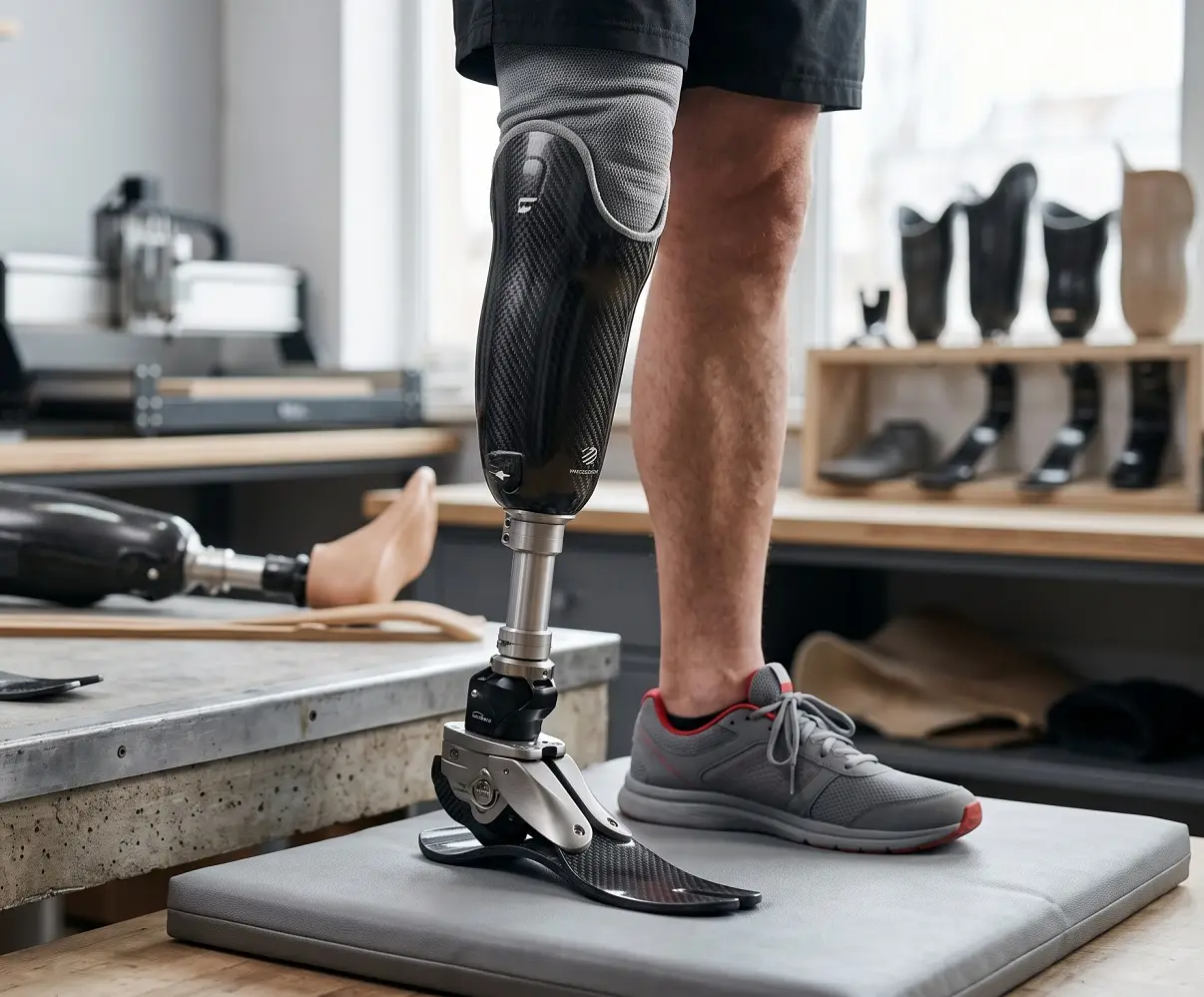
A crush injury is a severe trauma caused by prolonged pressure on muscle, bone, nerves, and blood supply simultaneously. When the damage is too extensive for the limb to heal or work again, a planned amputation followed by a custom prosthesis may offer a more dependable path back to walking, balance, and daily independence. This page explains how a crush injury progresses, when amputation becomes the safer choice, and how modern below-knee prosthetic care restores mobility.
Crush Injuries and the Path to Amputation
A crush injury combines two kinds of harm at once: direct mechanical destruction of tissue and loss of blood flow to everything beyond the point of pressure. Simply put, the tissue is both broken and deprived of oxygen. When muscle dies, and toxic byproducts build up to the point that the limb can no longer be saved, amputation with prosthetic fitting may become the most reliable way to restore function.
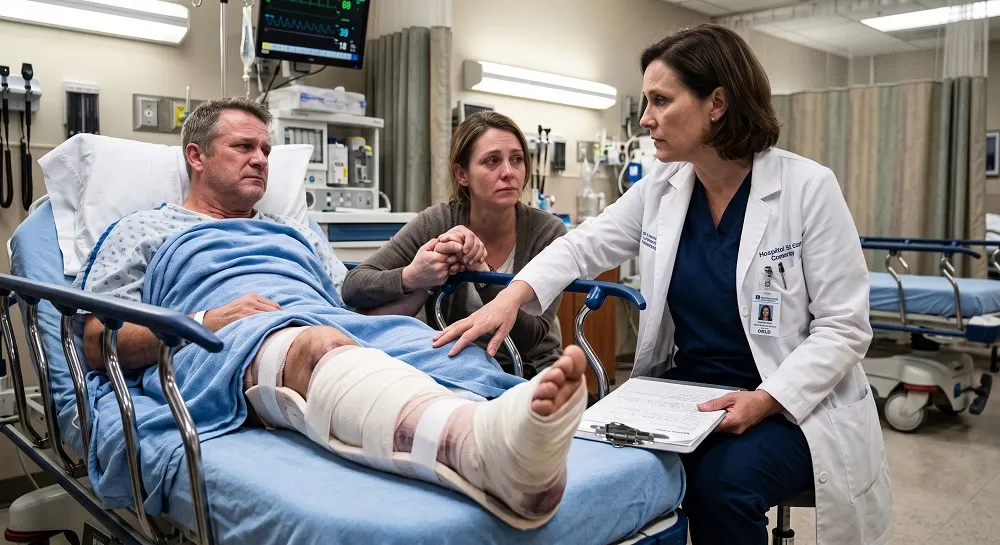
Here’s the cascade that follows a serious crush — for example, from a press, a vehicle, heavy machinery, or a collapsed structure:
- Compression crushes muscle and cuts off circulation to the tissue below it.
- Muscle cells begin to break down (a process called rhabdomyolysis) and leak proteins and electrolytes — mainly myoglobin and potassium.
- When the pressure is finally released, those substances flood back into the bloodstream.
- This can overwhelm the kidneys and stress the heart — the whole-body stage known as crush syndrome.
- If the limb tissue is beyond recovery, the care team weighs amputation to protect the person's life and restore mobility.
What Happens to the Body During a Severe Crush Injury?
The danger of a crush injury goes beyond the visible wound. The real concern is what happens inside the muscle and, later, throughout the whole body once blood flow returns.
Beyond the initial physical tissue damage, severe crush injury complications — such as rhabdomyolysis, acute kidney failure, and dangerously high potassium levels — can quickly become life-threatening if blood flow is suddenly restored before the body has been medically stabilized.
Muscle Breakdown, Myoglobin Release, and Systemic Toxicity
As crushed muscle dies, it releases myoglobin (a protein that can clog and injure the kidneys) and potassium (which, in large amounts, disturbs heart rhythm). Doctors track the scale of muscle breakdown with a blood marker called creatine kinase, or CK/CPK.
Laboratory marker note: Creatine kinase (CK/CPK) values above ~5,000 U/L typically signal a high risk for acute kidney injury, while levels exceeding tens of thousands indicate severe rhabdomyolysis. The attending trauma physician will determine specific resuscitation protocols and diagnostic thresholds.
The 6-Hour Ischemia Window: When Tissue Death Becomes Irreversible
Muscle can survive only so long without blood flow. Surgeons generally consider about six hours of warm ischemia a critical threshold, beyond which skeletal muscle necrosis generally becomes irreversible. Past that point, attempts to save the limb carry a rising risk of infection and repeated surgery — which is part of why an early, planned amputation may sometimes offer a more functional path forward.
What Is the Difference Between Compartment Syndrome and Crush Syndrome?
These two are related but not the same. One is a local pressure problem inside the limb; the other is a whole-body reaction.
Emergency Rescue Paradox and the Decompression Decision
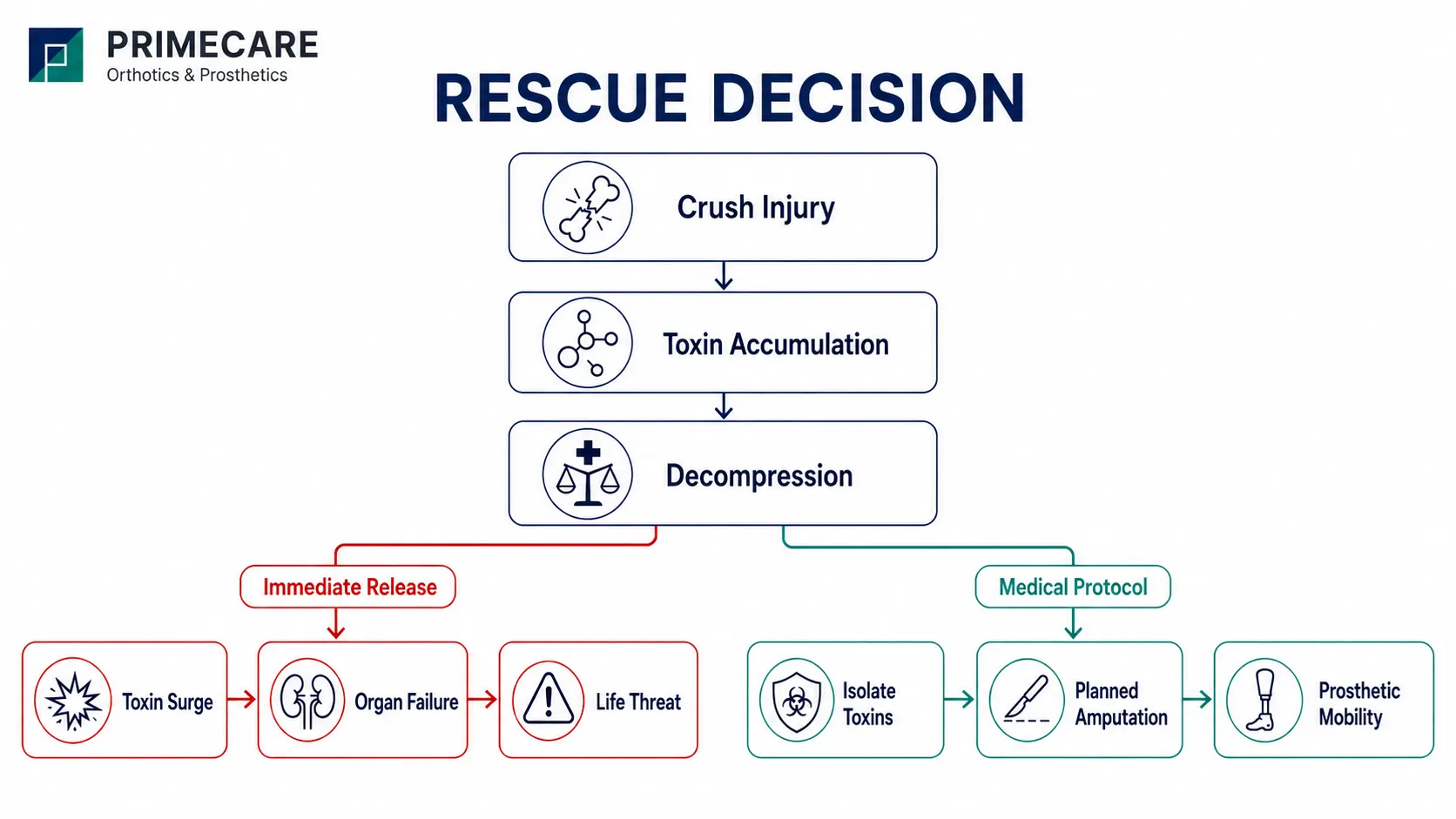
The rescue paradox is one of the more counterintuitive parts of crush care: freeing the limb too quickly can actually harm the patient. Lifting a heavy object off a trapped limb suddenly releases built-up toxins into the bloodstream, which can trigger a dangerous spike in potassium or cause sudden shock. Applying a tourniquet before decompression can help contain those toxins and protect the heart, while often making amputation of the non-viable limb the necessary outcome.
The flowchart below outlines the critical rescue decision sequence, showing why structured pre-decompression protocols can help prevent a potentially fatal toxic surge and support functional prosthetic recovery:
Why Can't You Immediately Release Someone from Under Heavy Debris?
In the field, emergency teams generally follow a sequence designed to protect the body before the toxins are released:
- Start IV fluids before decompression (rates in the range of about 0.5–1.5 L/hour, adjusted to the patient).
- Consider a tourniquet above the crush point before lifting the object, when the situation calls for it.
- Manage blood chemistry and urine acidity (often with bicarbonate) to protect the kidneys.
- Move quickly to surgical assessment of whether the limb can be saved.
(General emergency-medicine background — EMS and hospital teams direct exact protocols.)
Surgical Dilemmas: Fasciotomy Complications vs. Early Amputation
A fasciotomy (cutting open the tissue covering to relieve pressure) can save a compartment when performed early. Done too late, though, it can turn a contained area of dead tissue into an open, infection-prone wound.
Why timing matters: After prolonged ischemia, opening the limb can increase the risk of serious infection and sepsis. In those cases, a planned amputation may be the safer choice for the person's overall health and a faster return to function.
Limb Salvage vs. Amputation: Recognizing "Limb Salvage Fatigue"
Saving a limb isn’t always the outcome that gives someone the most mobility or the least pain. After many operations, a "saved" limb can remain painful, stiff, and unreliable — a pattern clinicians sometimes call limb salvage fatigue.
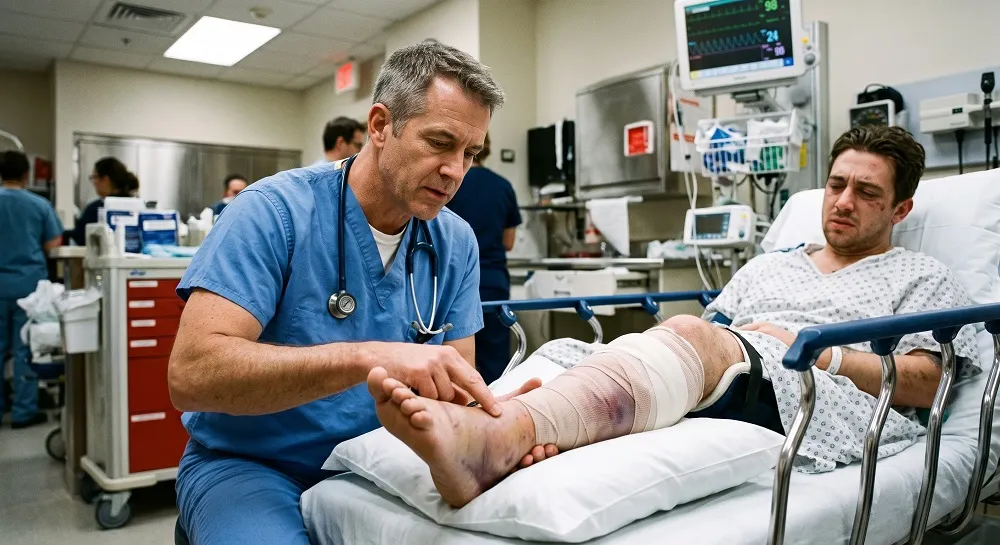
Is It Better to Keep a Damaged Leg or Choose Amputation?
There is no single answer, and the decision belongs to the patient and their surgical team. What matters is the realistic functional outcome: a limb that causes chronic pain and cannot bear weight may limit life far more than a well-fitted below-knee prosthesis. Many people find that amputation, when it is the right call, can mean trading an unusable limb for dependable movement.
Industrial Machinery & Vehicle Accidents: Specifics of Foot and Leg Crushing
Foot and lower-leg crush injuries frequently come from forklifts, hydraulic presses, agricultural and construction equipment, and vehicle accidents — the kinds of workplaces common across New Mexico. These injuries often involve degloving (skin torn from underlying tissue) and shattering of the small bones of the midfoot and hindfoot, which can be difficult to reconstruct into a pain-free, weight-bearing foot.
The Psychological Burden of "Limb Salvage Fatigue"
Repeated surgeries take a toll beyond the physical. A person may spend over a year cycling through operations on a foot that stays painful and numb, when a transition to a transtibial (below-knee) prosthesis could have returned them to walking sooner. Weighing quality of life, not just limb preservation, is a fair and important part of the conversation.
Scoring Severely Crushed Limbs: MESS Score and Functional Outcomes
Surgeons use the MESS (Mangled Extremity Severity Score) to help gauge how likely a severely injured limb is to be saved. Put simply, it adds up four factors:
- Energy and severity of the skeletal and soft-tissue injury
- Degree and duration of limb ischemia
- Presence and depth of shock
- Patient age
A total of about 7 or higher has historically been associated with a high likelihood of amputation. It’s a guide, not a verdict — its predictive value is debated, and it supports clinical judgment rather than replacing it.
Transitioning from Amputation to Prosthetics: Restoring Functionality
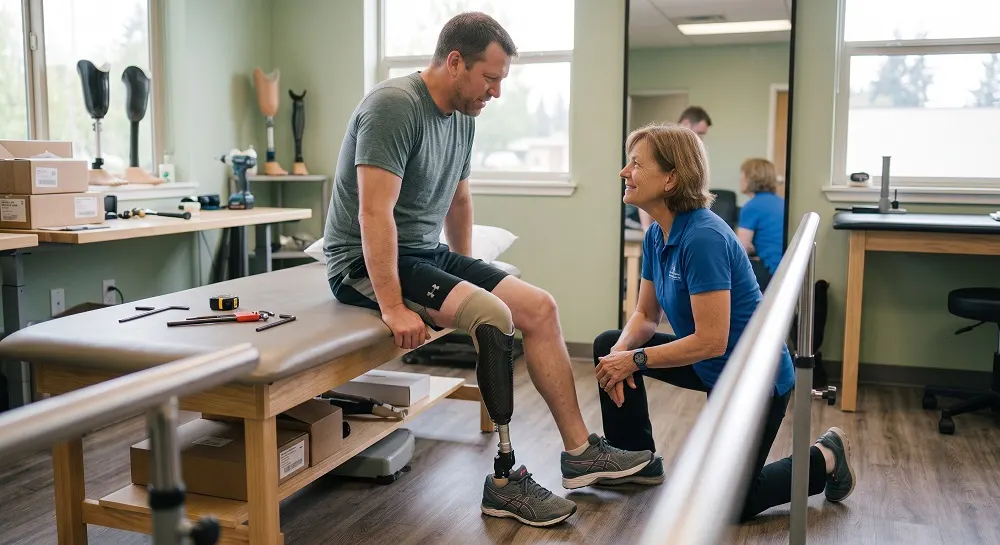
Amputation after a severe crush injury isn’t a failure — it’s a planned step toward functional recovery. Fitting a custom prosthetic leg after a crush injury can restore up to 90% of natural gait biomechanics (as shown in clinical gait studies). For many people, this can mean more movement and less pain than living with a salvaged, non-functional limb. PrimeCare designs and fits custom lower-limb prosthetics for exactly this kind of recovery, including cases of traumatic amputation.
The road from surgery to a definitive prosthesis usually looks like this:
- Weeks 1–6: Wound healing, edema (swelling) control, and sometimes VAC therapy (a vacuum dressing that helps close and clean the wound).
- Months 2–6: A temporary diagnostic socket to begin standing and gait training while the limb changes shape.
- After that: A definitive prosthesis, ongoing alignment, and physical therapy to build endurance.
How Soon After a Crush Injury Can You Get a Prosthetic?
Your overall crush injury recovery time depends on how quickly the residual limb heals, how fast swelling settles, and whether infection was a factor. Many patients begin with a temporary socket a couple of months after surgery and move to a definitive prosthesis once the limb volume stabilizes.
Post-Surgical Healing, VAC Therapy, and Edema Reduction (Weeks 1–6)
The first weeks focus on protecting the wound and reducing swelling so the residual limb can settle into a stable, cone-like shape. Compression with a shrinker sock and careful skin care help lay the groundwork for a comfortable socket later.
Below-Knee Prosthetic Types: Temporary Diagnostic Sockets vs. Definitive Fittings (Months 2–6)
A temporary (diagnostic) socket lets you start walking while the limb is still changing. Once the shape settles, a definitive custom socket is built for long-term fit and comfort. Our guide to the stages of prosthetic fitting outlines what to expect at each step.
Comparing AFO Orthoses with Modern Below-Knee Prostheses
When a foot is salvaged but painful, some patients rely on a heavy ankle-foot orthosis (AFO) — a brace that supports the foot and ankle. It’s worth comparing that reality against a below-knee prosthesis:
Managing Post-Amputation Complications: Phantom Pressure and Pain
Discomfort after amputation is common and manageable. Two patterns appear after a crush injury: ordinary phantom sensation, and a distinct feeling of pressure tied to the original injury.
Why Do I Feel Like My Missing Foot Is Still Trapped in a Vice?
A common misread: feeling like a missing foot is still "trapped" or squeezed isn’t imagined. It can be a somatosensory memory of the crush, with the brain replaying the moment of compression, rather than typical phantom limb pain. These sensations may respond to mirror therapy, proper liner compression, and medication your care team may recommend.
Stump Preparation and Socket Fitting for Maximum Comfort
Getting the residual limb ready for a socket is a step-by-step process:
- Use of silicone or copolymer liners to cushion and protect the limb.
- Scar desensitization so the tissue tolerates contact and pressure.
- Neuroma prevention (guarding against painful nerve-end bundles).
- Edema control with a shrinker sock to shape the limb.
- Ongoing skin care to prevent breakdown inside the socket.
Workers' Compensation and Lifetime Prosthetic Care Costs
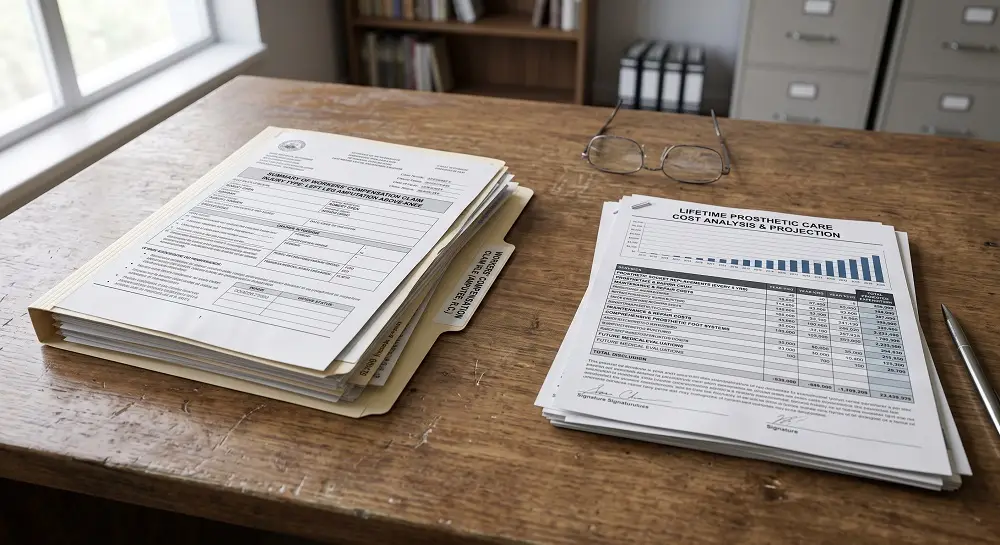
Facing a workplace accident amputation comes with complex physical and financial demands, but planning for those needs early makes long-term care easier to fund. Because a prosthesis isn’t a one-time purchase, planning for future replacements and ongoing supplies from the start can make it easier to manage both your recovery and any workers' compensation or insurance claim.
Lifetime prosthetic requirements depend on individual functional classification (K-levels), component durability, and anatomical changes over time. A comprehensive care plan accounts for:
- Socket replacement (often needed periodically as the limb changes)
- Full prosthesis replacement over the years
- Liners, sleeves, and other consumables
- Physical therapy and gait training
- Regular follow-up visits and adjustments
PrimeCare works with a range of insurers — including HMOs, PPOs, and Medicare — and provides clear cost information up front.