
.svg)
.svg)


What Is Acute Limb Ischemia?
Acute limb ischemia is a sudden drop in blood flow to an arm or leg. It’s considered to be a vascular emergency because muscle, nerve, and skin tissue can lose oxygen quickly. When care is delayed, the condition can lead to permanent tissue damage, limb loss, or life-threatening complications.
The blockage may come from a blood clot that forms inside a narrowed artery, a clot that travels from another part of the body, trauma, or failure of a previous vascular graft. While the leg is more often affected than the arm, either can be involved. The goal of treatment is to restore blood flow before the tissue becomes nonviable.
What Can Cause Acute Limb Ischemia?
Acute limb ischemia happens when blood flow to an arm or leg is suddenly blocked or severely reduced. The most common causes are blood clots, artery disease, trauma, or blockage of a previous vascular repair.
- Blood clot from the heart: A clot can travel from the heart and block an artery in the arm or leg.
- Peripheral artery disease: Narrowed arteries can allow a clot to form and suddenly stop blood flow.
- Blocked bypass graft or stent: A previous vascular repair can become blocked and cause sudden ischemia.
- Vascular trauma: A fracture, crush injury, deep wound, or surgical injury can damage an artery.
These causes often overlap with underlying vascular or heart conditions. After emergency treatment, doctors may recommend follow-up testing and long-term medication to help lower the risk of another blockage.
Acute Limb Ischemia Symptoms That Need Emergency Care

Acute limb ischemia can progress quickly, so don’t ignore sudden changes in circulation. Symptoms may not all appear at the same time, but pain with numbness, weakness, color change, or cold skin needs urgent medical attention.
- Sudden limb pain: Pain may be severe, constant, and different from chronic leg pain caused by poor circulation.
- Pale or bluish skin color: The affected limb may look unusually pale, blue, or discolored because blood flow has dropped suddenly.
- Weak or absent pulse: A pulse may be difficult to feel below the blocked artery, which may signal reduced circulation.
- Numbness or tingling: Numbness, tingling, or reduced sensation can mean that nerves aren’t getting enough oxygen.
- Weakness or loss of movement: Weakness, difficulty moving the limb, or paralysis is especially serious and may signal advanced ischemia.
- Cold skin temperature: The limb may feel colder than the other side because warm blood is not reaching the tissue properly.
- Urgent change in limb function: A limb that becomes cold, pale, blue, numb, weak, or difficult to move needs immediate medical assessment.
These symptoms may signal a serious loss of blood flow. Prompt evaluation gives doctors the best chance to restore circulation, limit tissue damage, and reduce the risk of amputation.
Acute Limb Ischemia Treatment Options
Acute limb ischemia treatment focuses on restoring blood flow, limiting tissue damage, and reducing the chance of another clot. The right treatment approach depends on how severe the blockage is, how long symptoms have been present, and whether the affected tissue can still recover.
- Anticoagulation: Blood-thinning medication may be started early to reduce further clot formation. This doesn’t remove the blockage by itself, but it can help prevent the clot from getting larger.
- Catheter-directed thrombolysis: A clot-dissolving medication may be delivered directly into the blocked artery through a catheter. This option may be used when the limb is still salvageable, and the clot can be treated without open surgery.
- Mechanical thrombectomy: A vascular specialist may use a catheter-based device to remove or break up the clot. This can help restore blood flow while avoiding a larger incision in some cases.
- Open surgical embolectomy: Surgery may be performed to remove a clot from the artery. This may be needed when the blockage is severe, symptoms are advanced, or faster clot removal is required.
- Angioplasty and stenting: A narrowed artery may be opened with a balloon, and a stent may be placed to help keep the vessel open. This may be used when artery narrowing contributed to the blockage.
- Bypass surgery: A surgeon may create a new route for blood flow around the blocked artery. This option may be recommended when the artery damage is too extensive for less invasive procedures.
- Fasciotomy: Some patients need this procedure after blood flow is restored because swelling can increase pressure inside the muscles. Fasciotomy releases that pressure to protect nerves and tissue.
Revascularization can save the limb in many cases, but it cannot reverse tissue death that has already become permanent. When tissue is no longer viable, doctors may need to discuss amputation as part of the overall treatment plan.
Why Acute Limb Ischemia Can Lead to Amputation

Acute limb ischemia can lead to amputation when the affected limb no longer has enough blood flow to survive or heal safely. The main reasons include tissue death, a high risk of severe infection, unsuccessful restoration of circulation, or damage that is too extensive to preserve function.
The Tissue Has Already Died
When blood flow is blocked for too long, muscles, nerves, and skin can become nonviable. Once tissue has died, it cannot recover even if circulation is restored later. Amputation may be needed to remove tissue that can no longer heal.
Restoring Blood Flow Is Not Possible
Some blockages cannot be treated successfully with clot removal, bypass surgery, angioplasty, or stenting. This may occur when artery damage is too severe or when the limb has already progressed beyond the point where restoring blood flow would help. In that case, amputation may be the safest remaining treatment.
Infection or Sepsis Risk Is Too High
Dead or severely damaged tissue can become infected and may spread infection into the bloodstream. This can create a risk of sepsis, especially when the body cannot control the infection locally. Amputation may be needed to remove the source of the infection and protect the patient’s overall health.
Muscle and Nerve Damage Is Too Severe
Acute limb ischemia can damage the muscles and nerves that control movement and sensation. If the limb would remain painful, unstable, or nonfunctional after treatment, preservation may not improve the patient’s outcome. Amputation may be considered when the limb can no longer support safe or functional use.
The Limb Cannot Heal After Surgery
Even following treatment, some tissue may not have enough circulation to close wounds or recover from surgical repair. Poor healing can lead to repeated wounds, infection, and prolonged pain. Amputation may be recommended when a higher level has a better chance of healing and later prosthetic use.
Recovery After Amputation Caused by Acute Limb Ischemia
Recovery after amputation focuses on wound healing, medical stability, and preparation for possible prosthetic use. Because acute limb ischemia results from a sudden loss of blood flow, ongoing vascular care remains an important part of recovery.
- Wound healing: The incision must heal before prosthetic fitting can begin. The care team checks for infection, delayed healing, swelling, and circulation problems.
- Swelling control: Swelling changes the size and shape of the residual limb. Compression, limb shaping, and proper positioning can help prepare the limb for a prosthetic socket.
- Medical stabilization: Doctors may manage diabetes, heart disease, atrial fibrillation, smoking history, or clotting disorders. This helps reduce the risk of another vascular event.
- Physical therapy: Therapy may include transfers, balance work, strengthening, and range-of-motion exercises. These steps help the patient regain safe movement before prosthetic training.
- Prosthetic evaluation: Once the limb heals and swelling decreases, the prosthetist can assess skin condition, limb shape, strength, balance, and mobility goals.
A safe recovery depends on medical follow-up, gradual rehabilitation, and consistent residual limb care. When the residual limb is healed and stable, prosthetic planning can progress with a better chance of comfort and long-term use.
Prosthetic Options After Amputation from Acute Limb Ischemia
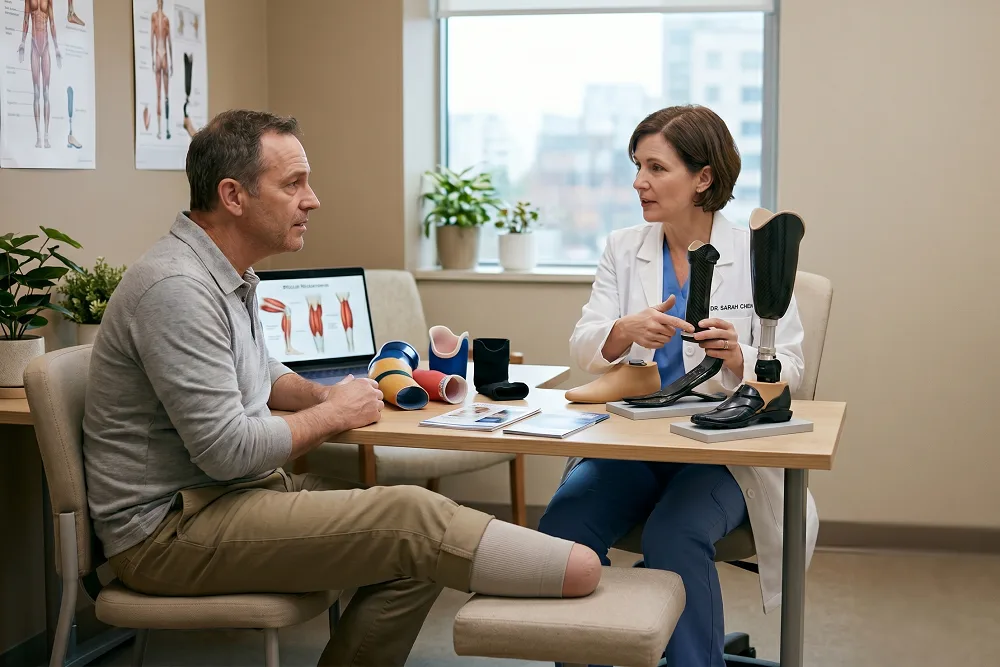
Prosthetic care is tailored to factors like the amputation level, circulation, skin health, strength, balance, and daily mobility goals. Since acute limb ischemia affects blood flow, socket comfort and skin protection are especially important.
Partial Foot Prosthetics
Partial foot prosthetics may be used after toe, forefoot, or midfoot amputation. Options can include toe fillers, carbon-fiber foot plates, custom inserts, or brace-style designs that support balance and rollover.
Syme’s and Ankle Disarticulation Prosthetics
Syme’s and ankle disarticulation prosthetics are used when the amputation is near or through the ankle. The socket must fit the residual limb shape carefully to manage pressure and improve stability.
Below-Knee Prosthetics
A below-knee prosthesis, or transtibial prosthesis, is used when the knee is preserved. It typically includes a custom socket, a liner, a suspension system, a pylon, and a prosthetic foot.
Above-Knee Prosthetics
An above-knee prosthesis, or transfemoral prosthesis, is used when the amputation occurs above the knee. It includes a socket, prosthetic knee, pylon, and foot.
Knee Disarticulation Prosthetics
A knee disarticulation prosthesis is used when the amputation occurs through the knee joint. It needs a specialized socket and knee setup to support comfort, sitting, and walking mechanics.
Hip Disarticulation Prosthetics
A hip disarticulation prosthesis is designed for cases where the leg is removed at the hip joint. It usually includes a pelvic socket, hip joint, knee unit, pylon, and prosthetic foot.
Additional Support for Mobility After Acute Limb Ischemia Amputation
Socket design plays a major role after amputation related to acute limb ischemia, since the residual limb may have sensitive skin, reduced circulation, or areas that require careful pressure management. A custom socket should distribute weight evenly, reduce rubbing, and protect bony or fragile areas. Liners, suspension systems, prosthetic socks, and adjustable socket features may also help manage daily limb volume changes and improve comfort during walking.
Moving Forward After Acute Limb Ischemia and Limb Loss
Acute limb ischemia requires fast medical care, and recovery may continue long after emergency treatment or amputation. When limb loss occurs, the right prosthetic plan can support safer movement, improve daily function, and protect the residual limb during healing.
A combination of medical follow-up, socket adjustments, component selection, and rehabilitation helps give patients a stronger foundation for long-term mobility.