.svg)
.svg)





Yes, an amputee can get a CDL with a prosthetic leg, but approval depends on whether the individual meets specific federal medical and functional requirements. As commercial driving is regulated more strictly than standard licenses, all drivers must demonstrate they can safely operate a commercial vehicle.
Eligibility depends on prosthetic control and the ability to operate pedals and vehicle controls safely. Some drivers may need a Skill Performance Evaluation (SPE) to prove that they can drive commercial vehicles safely.
At PrimeCare, we provide custom prosthetic devices in New Mexico to help people stay active in demanding professions, including commercial driving. Prosthetic fit, limb control, and the ability to manage pedals and vehicle stability play a direct role in CDL approval and ongoing certification. Our prosthetic care and functional assessments focus on the real requirements of commercial driving, helping clients prepare for medical review, testing, and long-term work on the road.
CDL Approval Is Based on Ability, Not Limb Loss

A person with prosthetic lower limbs can get a CDL license if they meet medical requirements and demonstrate safe vehicle control. It’s important to note that federal regulations do not prohibit commercial driving based on limb loss alone. Licensing decisions focus on functional ability, medical certification, and, when required, completing a Skill Performance Evaluation.
How Drivers with Prosthetics Control a Commercial Vehicle
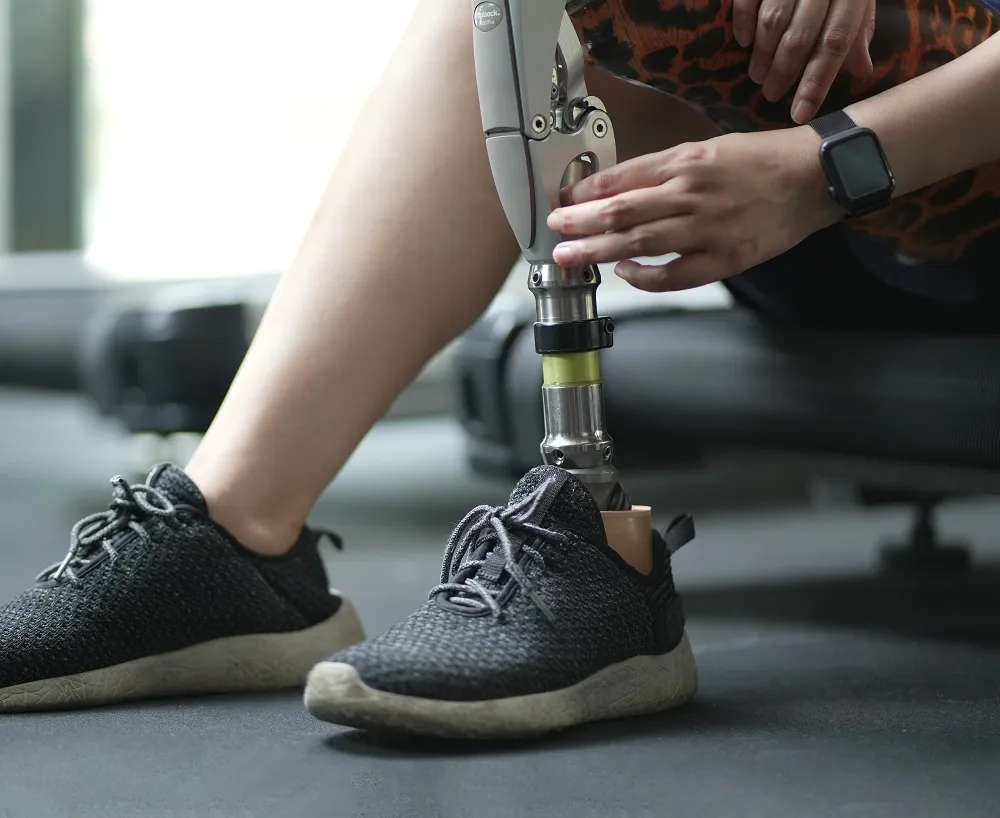
Commercial driving with prosthetics requires precise braking, acceleration, and sustained lower-body positioning. When a prosthetic leg fits correctly and matches the driver’s physical needs, it can support these demands.
Drivers may operate vehicles using:
- A prosthetic limb that allows standard pedal use
- Modified pedal layouts, such as left-foot accelerators
- Seating and cab adjustments that improve balance and endurance
Control of the steering wheel, mirrors, and dashboard is also part of the overall evaluation.
How Pedals, Seating, and Vehicle Setup Affect Driving Ability
Vehicle setup plays a major role in certification decisions. Examiners observe how the driver enters and exits the truck, positions the prosthetic limb, and maintains pedal contact during stop-and-go traffic. When the prosthetic device is properly aligned, it reduces fatigue and improves reaction time. Even minor adjustments in seating height or pedal distance can change test outcomes.
Medical Examination for a CDL: What to Expect
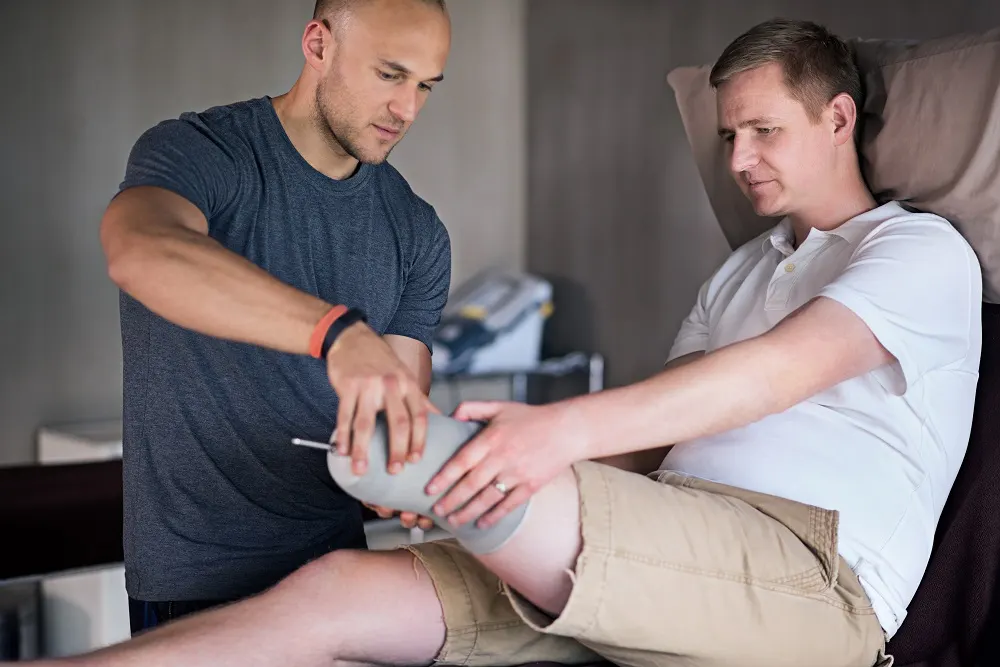
Every CDL applicant must pass a DOT medical examination, an exam that confirms that the driver can operate a commercial motor vehicle without creating safety risks.
For drivers with limb loss, the medical examination focuses on:
- Prosthetic stability and secure fit
- Strength and coordination during pedal use
- Endurance during extended sitting and repetitive movement
- Absence of conditions that interfere with safe operation
The medical exam does not measure driving experience or employment history. Its goal is to determine whether the driver’s medical condition and prosthetic device allow consistent, controlled vehicle operation under the physical demands of commercial transportation. In situations where standard certification cannot be issued, additional evaluation paths are available.
What the DOT Medical Exam Looks For
The examiner evaluates function rather than diagnosis. The goal is to determine whether the driver can control the vehicle consistently under normal and emergency conditions. If standard medical certification cannot be issued due to limb amputation, alternate certification options remain available.
When a Skill Performance Evaluation (SPE) Is Required

The Skill Performance Evaluation (SPE) exists for drivers with missing limbs who cannot meet standard medical certification criteria. The SPE allows qualified drivers to prove their ability through direct testing. The Federal Motor Carrier Safety Administration administers the program at the federal level.
What Happens During the SPE Driving Test
During the SPE test, the driver demonstrates real driving tasks using their prosthetic device and vehicle setup. Evaluators observe braking, acceleration, turning, and emergency response.
Approval depends on consistent performance rather than speed or experience level. The SPE certificate applies only to the vehicle type used during testing.
Who Issues a CDL for Amputee Drivers Using Prosthetics?
For amputees, CDL licensing is a joint state–federal process. States issue the license itself, while federal rules determine whether a driver with limb loss meets medical and functional requirements.
In practice:
- The state issues the learner’s permit and CDL.
- A certified medical examiner conducts the medical exam.
- Federal authorities approve SPE certification when required.
Starting June 23, 2025, the FMCSA will transmit medical variance data to State Driver’s Licensing Agencies (SDLAs), reducing delays for amputee drivers who rely on federal clearance.
What Types of Vehicles Are Adaptable for Amputees?
Commercial motor vehicles can be adapted to allow drivers with limb loss to operate them safely and meet CDL requirements. The type of vehicle and the nature of the adaptation depend on the driver’s level of amputation, prosthetic function, and the tasks needed during operation.
Common vehicle types that can be adapted include:
- Tractor-trailers, where pedal configuration, seating position, and cab access may be adjusted.
- Straight trucks, often used for local delivery, which may allow simpler pedal or seating modifications.
- Buses and motor coaches, where consistent braking control and stable seating are closely evaluated.
- Utility and service vehicles, when adaptations don’t interfere with required job tasks.
Approved adaptations may include pedal modifications, seating adjustments, cab access changes, or hand-operated controls when allowed. During CDL testing or a Skill Performance Evaluation, the driver must use the same vehicle setup that will be used in employment.
The Steps Required to Claim Your License as an Amputee
The process of obtaining a CDL involves more than just a standard trip to the DMV. You must follow a specific sequence of steps required by the federal government.
- Standard medical examination: Visit a doctor on the national registry of certified medical examiners for a DOT physical.
- Medical disqualification: The examiner will likely find you "not qualified" under standard rules, but will check the box for an SPE request.
- Specialist evaluation: You must see an orthopedic surgeon or a physical therapist to complete a medical evaluation summary.
- Application submission: Send your SPE certification application to the FMCSA regional office.
- The driving demonstration: Once the application is granted, you must perform a driving test in a vehicle representative of the one you will drive.
We recommend starting your paperwork early. Many drivers find that gathering medical records and getting a specialized examination can take several weeks.
CDL Career Paths for Drivers with Disabilities

Holding a CDL can open access to a wide range of commercial driving roles for drivers with disabilities, including those with limb loss who use a prosthetic leg. Drivers using below-knee prosthetics, above-knee prosthetic legs, or microprocessor-controlled prosthetic knees work in commercial driving roles when those devices offer stable pedal control and endurance. Some drivers rely on energy-storing prosthetic feet to maintain consistent braking and acceleration.
Commercial drivers with upper-limb limb loss may also qualify when hand prosthetics, partial hand prostheses, or upper-limb prosthetic systems allow them to control the steering wheel, gear selector, and in-cab controls reliably.
Drivers with disabilities work in positions such as:
- Long-haul and regional truck driving, when prosthetic control and endurance meet operational demands.
- Local delivery and distribution, often paired with predictable routes and adapted vehicle setups.
- Bus and shuttle services, where passenger safety and braking consistency are key.
- Municipal, utility, or fleet services, depending on license class and restrictions.
Career options may depend on whether the driver operates in interstate or intrastate commerce and whether the CDL includes restrictions related to vehicle type or control method. Employers typically focus on factors like license status, driving record, and safety compliance rather than disability classification.
Risks and Safety Considerations on the Road
Every truck driver faces risks, but those with a prosthetic leg must stay vigilant of unique factors.
- Mechanical failure: A broken component in a prosthetic device during a long haul can be a major issue.
- Physical fatigue: Operating pedals with a prosthesis can sometimes place more strain on the hip or back.
- Changing terrain: Moving in and out of a high cab on icy or uneven ground at truck stops requires extra caution to prevent falls.
- Regulatory compliance: You must keep your SPE certificate and medical card updated, as an expired document can lead to immediate disqualification.
- Cab access hazards: Entering or exiting a high cab in rain, ice, or uneven terrain increases fall risk at loading areas and truck stops.
These challenges don’t apply equally to every driver, but they are factors reviewed during medical evaluation and on-road testing. To meet commercial driving safety expectations, you need to be aware of these risks.
Staying on the Road with a Prosthetic and a CDL
Commercial driving places consistent physical demands on the lower limbs, but that doesn’t mean that those with prosthetics can’t thrive in this profession. Prosthetic care that accounts for pedal use, prolonged sitting, and vibration exposure supports both certification and daily performance.
PrimeCare works with commercial drivers to align prosthetic function with driving requirements, support medical review, and help qualified drivers remain active in professional transportation. Our compassionate care is designed to improve your quality of life. Contact us for guidance.