.svg)
.svg)





On the last day of February, the global healthcare community acknowledges Rare Disease Day — a time set aside to raise awareness about rare disorders and the people living with them. For many families, this day isn’t symbolic; instead, it reflects years of diagnosis delays, complex medical care, and in some situations, limb loss.
At PrimeCare, we have worked with individuals across New Mexico whose limb loss was linked to rare diseases rather than diabetes or trauma. For patients seeking advanced lower and upper limb prosthetics in New Mexico, Rare Disease Day highlights how uncommon diagnoses can affect mobility.
What Is Rare Disease Day?
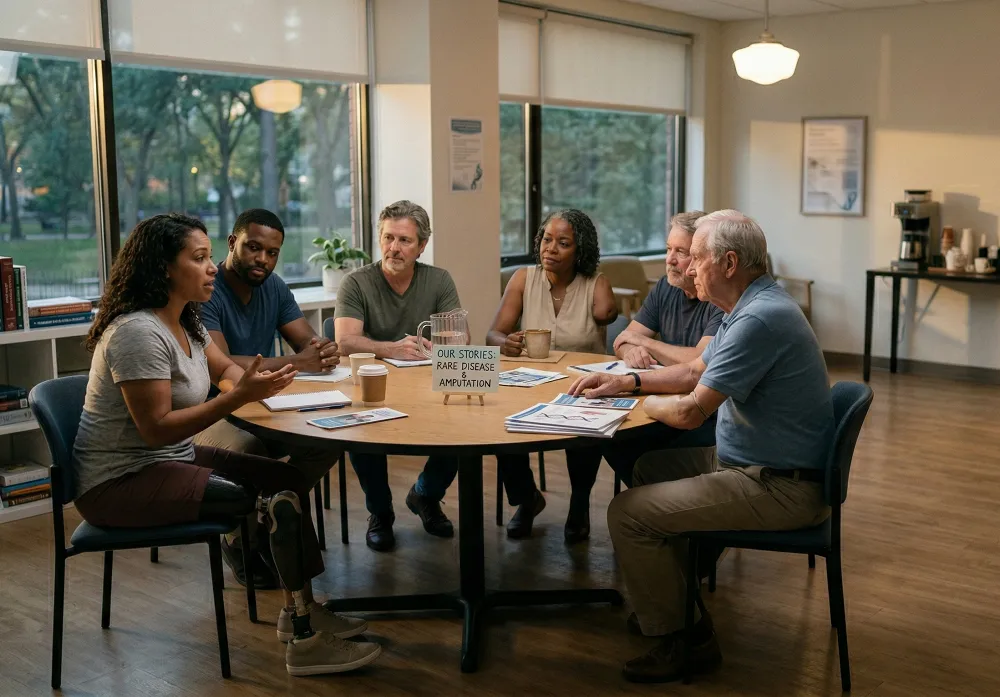
Rare Diseases Day is a worldwide event held on the final day of February. This falls on February 28 in most years, but occurs on February 29 during a leap year.
The campaign was established in 2008 by the European Organisation for Rare Diseases (EURORDIS) and is now recognized worldwide. In the United States, the National Organization for Rare Disorders (NORD) coordinates national Rare Disease Day events, including activities at the National Institutes of Health (NIH) main campus.
The day aims to:
- Raise awareness among policymakers and the general public;
- Promote research and clinical trials;
- Share rare disease stories;
- Improve access to treatment and coordinated care;
- Encourage collaboration among healthcare professionals.
For Rare Disease Day in 2026, events are expected to include panel discussions, scientific posters, in-person exhibitors, and virtual livestream sessions.
What Is Considered a Rare Disease, and How Often Do They Appear?
In the United States, a disease is considered rare when it affects fewer than 200,000 people nationwide. While a single rare disorder may affect a small population, there are more than 7,000 identified rare diseases.
Collectively, rare diseases affect an estimated 1 in 10 Americans.
Many rare disorders are:
- Genetic
- Neurological
- Autoimmune
- Metabolic
- Congenital
In New Mexico, state health statistics show higher rates of certain inherited and rural health-related complications. For updated public data, patients can review reports from the New Mexico Department of Health, which publishes regional healthcare statistics.
Some rare diseases remain stable throughout life. Others progressively damage tissue, bone, or vascular structures. When cases are severe, they may result in limb loss.
How Global Communities Mark Rare Disease Day
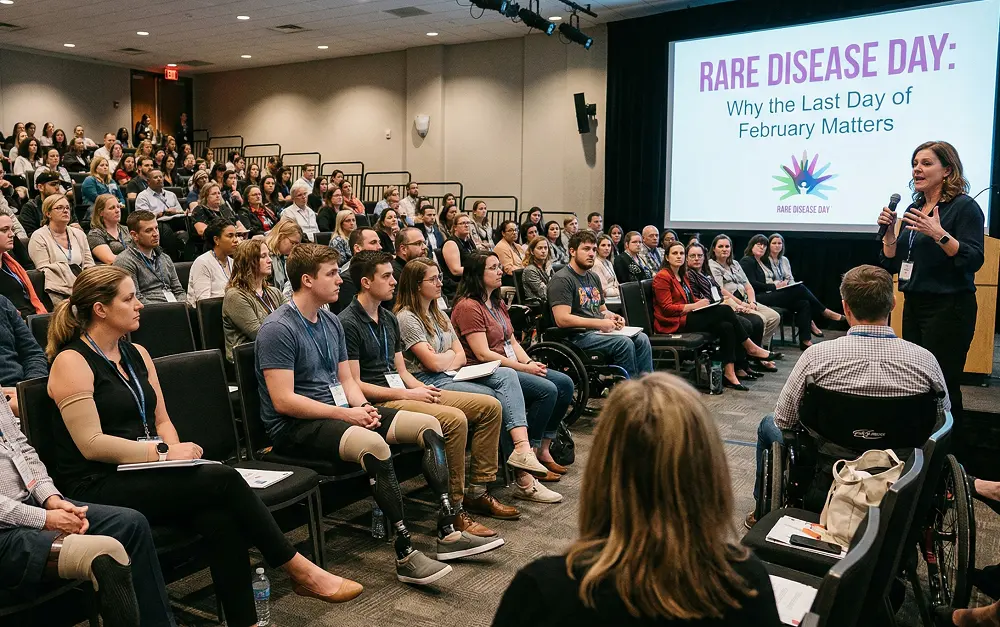
On February 28th, communities across the world participate in:
- Educational conferences and event agendas;
- Art exhibitions featuring rare diseases stories;
- Awareness campaigns using purple, blue, pink, and green light displays;
- Research symposiums hosted at institutions such as the NIH;
- Advocacy efforts promoting insurance coverage and new treatments.
The global campaign connects patients, caregivers, researchers, and organizations working toward better outcomes. For patients facing limb loss linked to a rare disease, the day often becomes a moment to speak publicly about topics like mobility, access to prosthetics, and rehabilitation.
Do Rare Disease Patients Face Different Rehabilitation Challenges?
Yes. Compared to vascular amputees, rare disease patients often experience:
- Younger age at amputation – particularly in congenital or genetic conditions.
- Multisystem involvement – neurological, orthopedic, or immune system complications.
- Bone fragility or structural deformities.
- Higher revision rates due to progressive disease.
- Psychological strain linked to long diagnostic journeys.
Patients living with a rare disorder may start prosthetic rehabilitation already fatigued from previous procedures, hospitalizations, or delayed diagnosis.
In many of these cases, modern lower-limb prosthetics must be engineered to accommodate skeletal irregularities, muscle weakness, and progressive disease patterns. Socket design may require additional modification when the bone anatomy is irregular or tissue coverage is compromised.
Warning Signs Rare Disease Patients Should Recognize
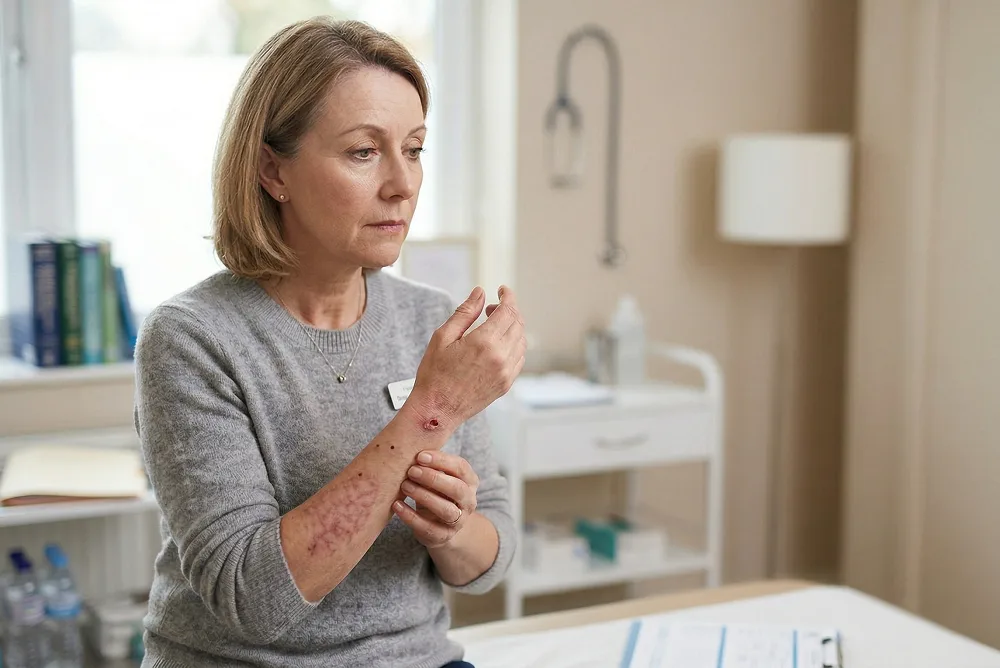
Patients diagnosed with rare disorders that affect circulation, bone, or immune response should watch for:
- Persistent non-healing wounds
- Skin color changes
- Severe unexplained limb pain
- Swelling not linked to injury
- Signs of infection (fever, drainage)
- Loss of sensation
Immediate medical attention may prevent tissue loss. In some cases, amputation becomes necessary to preserve life. In this case, prosthetic rehabilitation becomes the pathway back to independence.
What Prosthetic Care Is Connected to Rare Disease Day?
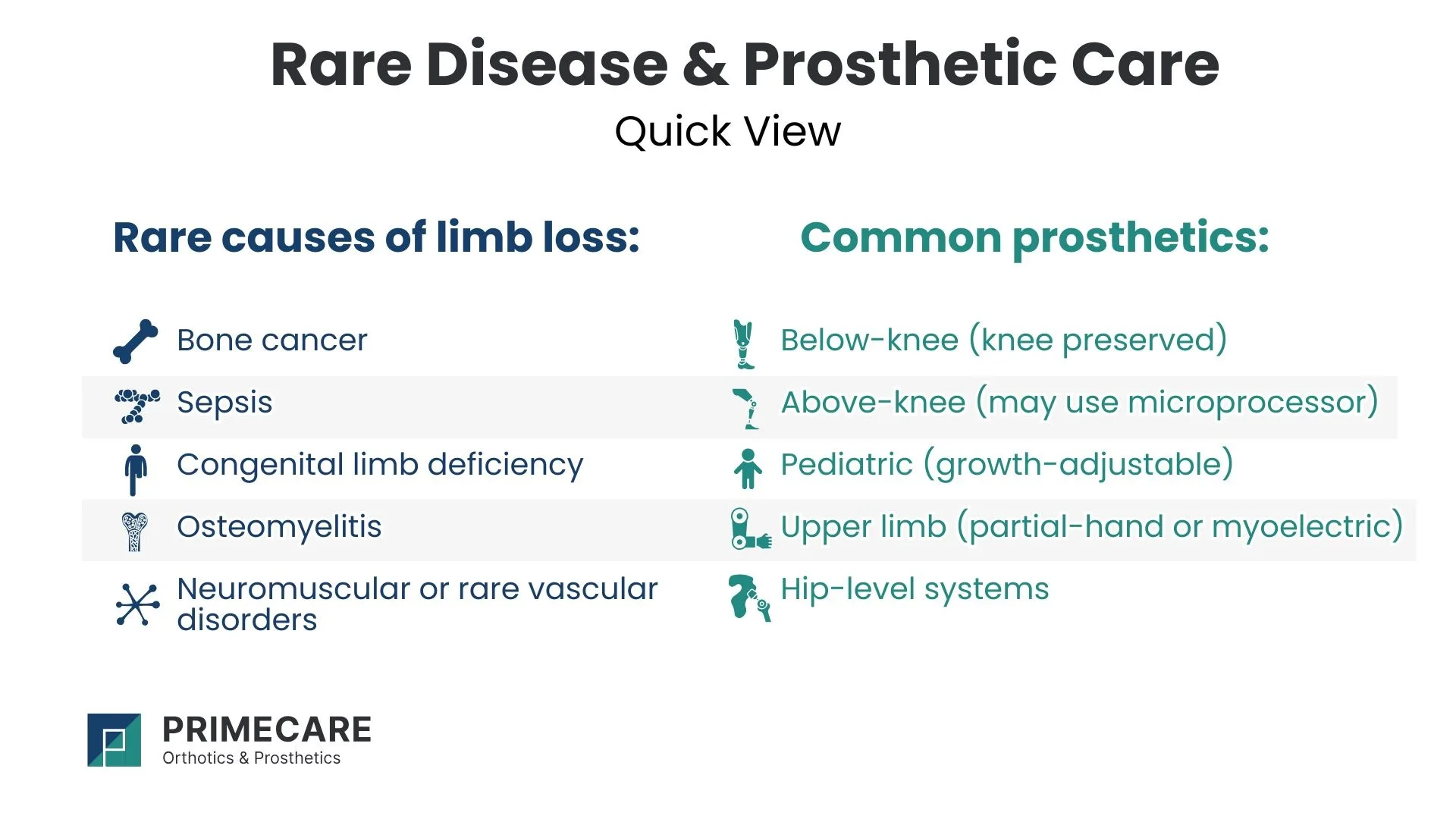
Rare diseases can lead to limb loss through multiple pathways:
- Bone cancer
- Sepsis
- Congenital limb deficiency
- Osteomyelitis
- Neuromuscular degeneration
- Vascular abnormalities unrelated to diabetes
While diabetes and peripheral artery disease remain common causes, rare disease patients often present with complex surgical histories and reconstructive attempts before amputation.
The most common prosthetic systems connected to rare disease cases include:
- Below-the-knee prostheses (transtibial): Frequently used when rare vascular disorders affect the lower leg while preserving the knee joint. These allow more efficient walking and lower energy demand.
- Above-the-knee prostheses (transfemoral): Required when the disease involves the knee joint or upper tibia. Many patients benefit from microprocessor-controlled knees to improve stability and reduce the risk of falling.
- Pediatric prosthetics: Children diagnosed with rare genetic disorders often need early prosthetic fitting that adapts to growth.
- Upper extremity prosthetics: Rare cancers, congenital differences, or severe infections may require partial-hand, transradial, or myoelectric arm systems.
- High-level prosthetics (hip disarticulation): In uncommon but severe cases involving extensive bone or tumor involvement, more complex systems are necessary.
Unlike standard vascular amputations, patients with rare diseases may need more frequent adjustments due to skeletal differences, muscle weakness, or disease progression. Prosthetic design must account for long-term adaptability, structural durability, and coordinated rehabilitation planning.
Why Coordinated Medical Care Shapes Prosthetic Outcomes
For rare disease patients, interdisciplinary coordination isn’t optional; it determines outcomes.
Effective rehabilitation requires communication among:
- Surgeons
- Prosthetists
- Physical therapists
- Primary care physicians
- Genetic specialists
- Pain management providers
Think of a prosthesis as a tool, not a cure. Success depends on alignment, physical therapy, strength, and medical stability. Patients recovering from rare disease-related amputation often need extended wound monitoring.
Healing after amputation does not follow a universal schedule. In some cases, online estimates like “6–8 weeks” can be misleading, especially when rare disease, vascular compromise, infection history, or systemic weakness affect recovery. Patients are typically ready for prosthetic fitting only when the incision is closed, drainage has stopped, swelling is controlled, the skin can tolerate weight-bearing, and both the surgeon and prosthetist agree it is safe to proceed.
Why Rare Disease Day Matters for Amputees and Their Families
Rare disease day is more than a calendar event. It draws attention to patients who may feel otherwise overlooked due to the low prevalence of their diagnosis.
For prosthetic providers, it reinforces several realities:
- Not all amputations follow predictable patterns.
- Young patients may require decades of component updates.
- Pediatric prosthetics must adapt to growth.
- Insurance authorization can be complex when diagnoses are uncommon.
- Education for caregivers is part of the treatment plan.
Many patients with rare diseases often become strong advocates for research and improved access to mobility devices. As Eddie Zepeda, PrimeCare’s board-certified prosthetist-orthotist, explains, “A prosthesis is a tool. It can restore movement and independence, but progress still depends on healing, training, strength, and ongoing care”.
5 Powerful Ways to Take Action on Rare Disease Day

Rare disease day is observed on the last day of February, but meaningful impact comes from specific, deliberate action. We’ve outlined some practical ways individuals and communities can contribute.
1. Turn a Diagnosis Into a Public Voice
Post a patient story. Record a short video. Share a personal journey with a rare disorder on social media. When rare disease patients speak openly about delayed diagnosis, surgeries, or mobility loss, it reshapes public perception and reduces stigma.
2. Wear the Colors and Start the Conversation
On Rare Disease Day, wear the campaign colors (purple, blue, green, and pink). Don’t be afraid to bring the topic into workplaces, schools, and community spaces. A simple conversation is an effective way to introduce someone to symptoms they may not recognize.
3. Fund What Insurance Doesn’t
Donate to organizations that support clinical trials and rare disease research. Many rare disorders receive limited federal funding. Private contributions often help accelerate access to new treatments and emerging therapies.
4. Ask Legislators About Coverage Gaps
Call or email state representatives about prosthetic coverage laws and rare treatment access. Many rare disease patients face insurance denials for advanced prosthetics or specialized rehabilitation. Reform stems from policy pressure.
5. Take Unusual Symptoms Seriously
Encourage friends and family to seek medical evaluation when something feels abnormal — persistent swelling, unexplained bone pain, neurological weakness, or non-healing wounds. Rare diagnoses are often delayed for years. Severe complications can be avoided altogether through earlier evaluation.
Restoring Movement After Rare Disease
For many patients, receiving a prosthesis is not the finish line. It is the beginning of a longer process that includes fitting adjustments, therapy, medical follow-up, and learning how to use the device with confidence. The prosthesis works best when it is supported by the patient’s effort, the prosthetist’s adjustments, the therapist’s training, the physician’s medical management, and family support.
PrimeCare has served New Mexico communities since 2009, providing below-knee and above-knee prosthetics, pediatric prosthetic services, and advanced socket technology. We want you to know that you’re not on this journey alone. If you or a family member is living with limb loss related to a rare disease, reach out to our office to discuss our prosthetic options, component selection, and rehabilitation planning.